Team 18 driver Anton De Pasquale has completed an extensive driver development program with General Motors in the United States ahead of this weekend’s Ipswich Super440.
The DEWALT Racing driver travelled to North Carolina following the Perth Super440 to participate in a GM academy conducted by Wise Optimization.
Led by former NASCAR driver and performance coach Josh Wise, the program examined several areas of De Pasquale’s performance, combining physical fitness testing and training with simulator sessions and driver development exercises.
Wise Optimization works with leading Chevrolet drivers, combining sports science, psychology, fitness and technical training to improve performance.
De Pasquale also toured General Motors’ Charlotte Technical Center in Concord, North Carolina, which supports Chevrolet and Cadillac racing programs around the world, including Formula 1.
The facility develops performance, simulation and strategy tools for GM’s global motorsport operations.
De Pasquale’s US visit also included tours of several NASCAR team workshops before he travelled to Richmond Raceway for the NASCAR Cup Series Cook Out 400.
There he caught up with former Supercars rival and current Trackhouse Racing driver Shane van Gisbergen before watching the 400-lap race from the Trackhouse crew box.
“It has been a really cool trip and a great opportunity to experience the Wise Optimization program and then the NASCAR race in Richmond,” De Pasquale said.
“We’ve worked through fitness training, simulator sessions and several different driving exercises, all focused on helping me become a better driver.”
De Pasquale said the experience provided lessons he could bring back to his Supercars campaign in Australia.
“It’s been a really valuable experience, and I’ve learned plenty that I can take back to Australia.”
De Pasquale heads into the Ipswich Super440 sixth in the championship standings after recording four podium finishes across the past three events.
Three races will be held at Queensland Raceway this weekend as the Supercars Championship contests the final round of the Sprint Cup.
A $50,000 winner-takes-all sprint race will again provide every Supercars driver with something to race for when the BP Adelaide Grand Final opens in November, adding another layer of intrigue to the season finale.
The Mega Rewards-backed incentive returns after its successful introduction in 2025, with the 100-kilometre Friday race on November 27 offering a lucrative prize before attention turns to the four-driver championship battle later in the weekend. Last year’s inaugural cash sprint was won by Dick Johnson Racing’s Brodie Kostecki in wet conditions, setting the tone for a dramatic Grand Final.
This year’s contest will be even more intense, with drivers facing just 32 laps in Race 35 of the Supercars season to claim the prize.
Mega Rewards chief operating officer Andrew Potter said the Friday race ensured every competitor had something significant to fight for.
“While the Grand Final format will again see four drivers battling for the Supercars title, the $50,000 prize gives every driver on the grid something to fight for on Friday,” Potter said.
BP Adelaide Grand Final event director Shaun Bennetts said the return of the cash prize would once again lift the intensity of the opening day.
“We saw some wild racing last year as drivers battled the conditions, and each other, on Friday at the bp Adelaide Grand Final,” Bennetts said.
“To see the prize return in 2026 means fans will be treated to high stakes and high commitment from drivers and teams from the get-go.”
He added that while only one of the four finalists would leave Adelaide as Supercars champion, every driver in the field would have a genuine opportunity to secure the Friday payday.
Supercars executive chairman Barclay Nettlefold said the cash incentive complemented what had already been one of the most competitive seasons in recent memory.
“The $50,000 prize gives drivers a reason to attack from the opening race, and on the unforgiving streets of Adelaide, that can only add to the pressure, intensity and spectacle for fans,” Nettlefold said.
The BP Adelaide Grand Final will be held on the Adelaide street circuit from November 26-29, with the Friday sprint kicking off a weekend that will decide the 2026 Supercars championship.
Garry Rogers Motorsport will return to the Supercars grid for the first time in six years, entering a wildcard in the 2026 Bathurst 1000 for James Moffat and Nathan Herne.
The famous team spent more than 30 years competing in the Australian Touring Car Championship and Supercars before withdrawing following the 2019 season.
Its most recent Supercars appearance came as a wildcard at the 2020 Bathurst 1000, although Herne was controversially denied dispensation to compete at the event.
Six years later, the 23-year-old will finally make his Supercars debut alongside veteran Moffat in an ex-Triple Eight Chevrolet Camaro.
The announcement was made on the birthday of late team owner Garry Rogers, who was a strong supporter of Herne’s career and had wanted to see the young driver reach Supercars.
GRM director Barry Rogers said returning to Bathurst was about celebrating his father’s contribution to Australian motorsport.
“My motivation for wanting to return to Supercars and race at the 2026 Bathurst 1000 was in memory and out of respect for my dad, Garry Rogers,” Rogers said.
“Dad always supported young people, Nathan Herne won the 2022 Trans Am Series as a 19-year-old under the tutelage of Garry.
“To have him joined by James Moffat, who dad was tremendously fond of and also a GRM Trans Am Champion, is a very fitting lineup.”
Herne has enjoyed considerable success since his unsuccessful attempt to make his Bathurst debut in 2020, including becoming a two-time Trans Am Cup Series champion.
He currently leads the 2026 Trans Am title race ahead of Moffat, despite competing for his own operation.
“We tried back in 2020 and weren’t successful at getting everything across the line,” Herne said.
“Coming back all these years later with GRM and with all the new experiences I’ve had in my career since that time, I’m absolutely a better driver and person for it.”
Moffat brings considerable Bathurst experience to the wildcard, having made 16 consecutive starts in the Great Race.
He raced for GRM in Supercars during 2016 and 2017 and has remained an important part of the team’s racing program, winning the 2023 Trans Am title.
“To be heading back to Bathurst with GRM is going to be very special,” Moffat said.
“I’m very much looking forward to lending my experience to the whole wildcard program and being able to help guide Nathan Herne through his first Bathurst 1000 start.”
GRM’s return also revives its long-running relationship with Valvoline, which dates back to 1988 and includes the team’s famous 2000 Bathurst 1000 victory.
The Camaro will increase General Motors representation to 10 cars for this year’s Great Race, to be held from October 8-11.
Long-time motorsport broadcaster Richard Craill has been appointed the permanent lead play-by-play commentator for the Repco Supercars Championship, taking over as the new ‘voice of Supercars’ ahead of next week’s NTI Townsville 500.
Craill, one of Australia’s most experienced motorsport commentators, will officially begin in the role when Supercars heads to the streets of Townsville on July 10-12. Joining him in the commentary booth will be six-time Bathurst 1000 winner Garth Tander, who continues as colour analyst, while former Supercars champions James Courtney and Mark Winterbottom are expected to make occasional guest appearances throughout the season.
The appointment marks a significant milestone in Craill’s broadcasting career after years covering top-level motorsport across Australia and New Zealand.
“An opportunity like this is something you work towards for your entire career and it’s unlike anything I ever expected to be able to do, so it’s absolutely not something you take for granted,” Craill said.
The Barossa Valley-born commentator has become a familiar voice to Australian racing fans through his work across the Australian Grand Prix, Meguiar’s Bathurst 12 Hour, Shannons SpeedSeries, New Zealand’s Repco NextGen Championship and Supercars support categories.
Craill lead Supercars commentary team during the championship’s New Zealand events at Taupo and Ruapuna earlier this season, experience that helped pave the way for his permanent appointment.
Reflecting on his new role, Craill said he had long admired the iconic broadcasters who inspired him to pursue a career behind the microphone.
“My personal motorsport heroes weren’t just the drivers I followed when I was growing up, but the iconic broadcasters who told their stories,” he said.
Craill believes the current Supercars Championship provides the perfect backdrop for his new role, citing the competitiveness of the field and the unpredictable nature of this year’s title fight.
“We’re going into every weekend with little clue of who’s going to win the trophies and that is the best possible thing for us, for the people at the track and everyone watching at home,” he said.
Fellow race callers Chad Neylon and Matt Naulty – who were commentating on a rotating basis with Craill this season following Supercars parting ways with stalwarts Neal Crompton and Mark Skaife – will remain key members of the broadcast team. Neylon will take on an expanded on-screen role, while both broadcasters will continue calling Supercars sessions and support categories throughout the season.
The championship resumes with the NTI Townsville 500, where fans will hear Craill’s voice leading Supercars television coverage for the first time in his new permanent position.
Triple Eight Race Engineering has signed rising motorsport talent Oli Wickham to a long-term driver development program, with the 16-year-old set to make his Ford Mustang Cup Australia debut this weekend at Queensland Raceway.
The Brisbane-based Supercars powerhouse announced the new partnership as part of a program designed to mentor and develop Wickham through the early stages of his racing career while identifying future opportunities within the organisation.
Wickham attracted the attention of Triple Eight management through a combination of raw speed, technical understanding and a strong ability to learn, qualities the team believes align closely with its motorsport philosophy. The young Queenslander claimed the GR Cup title in 2025 and has quickly emerged as one of Australia’s most promising junior drivers.
Under the arrangement, Wickham will receive guidance and support from Triple Eight’s management, engineering staff and drivers, both on and off the track.
The pathway mirrors successful development programs previously undertaken by the team. Triple Eight’s current Supercars stars have followed similar routes, including reigning Supercars champion Will Brown, who won the GR Cup in 2016, and championship leader Broc Feeney, who joined the organisation as a teenager through its Super2 program.
Wickham’s first assignment under the new arrangement comes immediately, with the teenager stepping into a second Shaw and Partners Financial Services Racing entry in the Mustang Cup Australia series at Queensland Raceway.
He will race alongside experienced driver Jack Perkins, who will also take on a mentoring role as team manager during Wickham’s debut weekend. Perkins is already a regular competitor in the category and is set to drive for Triple Eight during this year’s Supercars Enduro Cup campaign.
Triple Eight Managing Director Jamie Whincup said the team recognised Wickham’s potential from the first time it saw him behind the wheel.
Whincup said the objective was to identify talented young drivers early, provide them with the right support and place them in programs that maximise their opportunities for success.
The move also signals Triple Eight’s continued interest in driver development beyond its current three-car Supercars operation. While no future plans have been confirmed, the team’s new partnership with Ford Racing could potentially create opportunities in categories such as Mustang Cup and Super2 in coming years.
For Wickham, the opportunity represents a significant step towards his ultimate ambition of racing in Supercars, with the teenager describing Triple Eight as the ideal environment to continue his development and pursue his long-term motorsport goals.
Matt Stone Racing has announced Aaron Seton will partner with Zach Bates as the co-driver of the No.10 Bendix Racing Camaro for the 2026 Supercars Enduro season. In addition to his endurance role, Seton will again take the wheel of an MSR-backed wildcard entry – this time at the Ipswich Super440.
The son of two-time Australian Touring Car Champion Glenn Seton and grandson of 1965 Bathurst winner Bo Seton, Aaron returns to Matt Stone Racing in 2026 following a highly productive 2025 campaign.
His previous wildcard appearances with the team, alongside fellow newly confirmed 2026 co-driver Cameron Crick, laid a strong foundation for what has become a natural continuation of a strong partnership.
Seton’s familiarity with the team’s systems, personnel, and culture positions him as a key asset as the team says it looks ahead at a strong endurance campaign.
MSR says the decision to retain Seton in both the main game and wildcard programs reflects a broader commitment from the team to invest in its people as the squad continues to establish itself as a consistent top 10 contender and pushes toward regular podium finishes.
“I’m really excited to be back with Matt Stone Racing for 2026. Last year’s wildcard program was a great step forward for me, not just in terms of results but also in building strong relationships within the team,” Seton said.
“Zach is a great young guy and a massive talent. I’m excited to take on this year’s enduro season with him alongside the wildcard entry – and hopefully bring home some strong results for the team.”
Team Owner Matt Stone said the team has worked hard to build a group of people who believe in the direction it is heading.
“Aaron fits into that dynamic perfectly. Continuing with him was an easy decision,” Stone said.
“This year is about backing our people and building consistency as we keep moving forward. We’re not here to stand still; we’re here to keep climbing, and we’re excited to have Aaron on-board in 2026.”
Triple Eight Race Engineering has built its reputation on adaptability. From Holden’s factory spearhead to Chevrolet’s Gen3 benchmark, the Brisbane-based operation has long been the technical reference point in the Supercars Championship.
Now, as it prepares for the 2026 season, it embarks on another defining chapter – this time as Ford’s homologation team.
It is not new territory in principle – it was a decade and a half ago that it went the other way from Ford to Holden – but in execution, it may be one of the most demanding transitions in the team’s history.
Not new to homologation – but different
Triple Eight’s role as homologation team is hardly unprecedented. It fulfilled that responsibility for Holden during the Commodore era and continued in that capacity under Chevrolet in the Gen3 Camaro program. The processes – aerodynamic validation, parity engagement, and development sign-off – are embedded in the organisation’s DNA.
What has changed in 2026 is the scope.
The switch from Chevrolet to Ford required not just a bodywork and aero reset, but the construction of four brand-new Mustangs and the establishment of a full in-house engine program. Previously, the team outsourced its engines. Now, it owns the responsibility from machining to dyno validation.
Team principal Jamie Whincup is candid about the scale of that undertaking.
“Absolutely, we’ll be ready,” Whincup said at the team’s launch in Geelong Victoria when asked about round one preparedness
“It’s a huge, huge commitment to build four new cars and an engine shop and get to the first round.”
Being homologation team is familiar. Doubling the technical footprint at the same time is not.
“We’ve taken on the engine shop,” Whincup explained
“We’re now responsible for the engine performance, which is all about reliability.”
That reliability focus is not theoretical. Ford packages experienced late-season issues in 2025 – including front splitters working loose as the Fords constantly bounced over racetrack kerbs and engine reliability concerns – and as the new homologation reference, Triple Eight must ensure those weaknesses are eliminated.
“There were quite a lot of reliability issues with the Ford engine towards the end of last year, which we’re going to find a fix for,” Whincup said.
The engines are built. They have been dyno-tested and signed off within performance windows. But racing validation is the final measure.
Whincup is realistic about expectations.
“I can’t guarantee that we’re going to have the two quickest cars in the field at round one,” he admitted
“What I can guarantee though is by the end of the year, we will be in that position.”
That statement reflects the team’s traditional development arc: strong out of the gate, relentless mid-season refinement, and clinical execution at season’s end.
The compressed build-up
The preparation schedule for 2026 is unforgiving.
A limited 60-kilometre shakedown. A single official test day. Homologation sign-offs at the Bathurst 12 Hour weekend. Then racing.
“It’s just such a short, sharp learning curve,” #88 driver Broc Feeney said at the team’s launch.
“We’ve got a shakedown… and then a test day at Sydney before we go racing. So we’ve got a lot to learn.”
In previous eras, manufacturer switches often came with extended testing programs. Under Gen3 cost controls and testing limits, development must be efficient and decisive.
Whincup described the immediate fortnight as “an absolute blur”, detailing back-to-back track days, rebuild cycles, homologation responsibilities and official test sessions.
The team’s Brisbane facility has effectively been running around the clock – chassis fabrication, engine calibration, loom integration, cooling validation, and data correlation against wind tunnel outputs.
From a systems-engineering perspective, the challenge is not reinventing the car – the Gen3 control components remain – but ensuring the Mustang’s aerodynamic platform, weight distribution and driveline calibration deliver predictable balance.
Will Brown , who will drive car #888 after the famous number was passed onto last year’s runner-up from Supercars legend Craig Lowndes, anticipates that drivability will be the early differentiator.
“Everything below the shell is the same,” Brown said
“But it’s the engine and the drivability… it’ll be very interesting to see what the aero’s like.”
For drivers accustomed to Camaro characteristics – throttle mapping, torque delivery curve, aero load sensitivity – adaptation speed will be critical.
Feeney: Hungry and unfinished
If the engineering shift defines the team’s macro challenge, the internal driver dynamic defines its competitive edge.
Feeney arrives in 2026 with a sharpened mindset.
“I just want to go win a championship,” he said
“We came up short (last year).”
Last season placed him in contention deep into the finals system. The sting of falling short has not faded.
“I’m probably a little bit angrier than I was four months ago,” he admitted.
It is a controlled intensity – one Whincup has monitored carefully.
“I kept an eye on him for the few weeks after the last round,” Whincup said, noting Feeney had been in “a pretty bad place” before bouncing back strongly.
Feeney’s challenge in 2026 will be managing that aggression within a car that may initially behave differently to what he expects. Adaptability, not just speed, will determine whether early rounds consolidate momentum or expose gaps.
Feeney is pragmatic about structural realities.
“The system’s not changing… you’ve got to figure out how to win that system,” he said of the finals format
In other words: execution over complaint.
Brown: Methodical and determined
For Brown, 2026 represents both redemption and opportunity.
Despite finishing second in the championship last year, he regards it as unfinished business.
“Coming off a bit of… a tough year for us, but we came second in the championship,” Brown said
His preparation has been deliberate.
“It’s the biggest off season I’ve had in preparation wise,” he confirmed, citing simulator work, fitness focus and mental reset.
Qualifying consistency remains an area of refinement, but the broader objective is unchanged.
“Been fighting for the championship the last three years in a row. So there’s no reason why I can’t (win it),” Brown said
The internal competition between Feeney and Brown is not destructive; it is catalytic. Each has proven capable of carrying the team’s championship ambitions. Under a new manufacturer banner, that dual threat becomes strategically valuable.
Parity and performance windows
The 2026 season will again test the robustness of the Gen3 parity framework.
Wind tunnel validation using the Windshear facility in North Carolina, shared aero processes and tighter technical oversight have narrowed the competitive spread. Brown believes the category is in a strong place.
“I think we’ve got one of the closest categories in the world currently,” he said
For Triple Eight, parity engagement is not theoretical. As homologation team, it must ensure Ford’s package sits within agreed performance windows without triggering controversy.
Whincup indicated confidence in the current balance, stating he believes parity is close
The additional complexity in 2026 is the introduction of Toyota into the championship landscape. While not yet central to Triple Eight’s program, the broader competitive ecosystem is shifting. Maintaining a stable aerodynamic baseline will be essential for category credibility.
Emotional shift: from rival to partner
For 15 years, Triple Eight built its legacy defeating Ford. Now, it represents it once again.
“It’s pretty special,” Feeney said of seeing the Ford badge on the suit and car
The symbolism matters – particularly for fans who have associated Triple Eight with Holden red or Chevrolet bowties in recent times.
Brown feels the manufacturer commitment.
“Ford have obviously put a lot of backing behind us this year,” he said
The partnership extends beyond branding. It involves engineering collaboration, resource allocation, and global performance alignment. The Mustang platform carries international racing pedigree; integrating that identity into Supercars competition adds both expectation and opportunity.
Round one — and beyond!
Round one may not deliver definitive answers.
Whincup is clear: unpredictability is inherent.
“We don’t know what’s going to happen at round one,” he said
“That’s the exciting thing about sport.”
But beyond the uncertainty lies structure.
Triple Eight’s competitive philosophy remains unchanged: build a robust base package, iterate relentlessly, peak when it matters.
In 2026, the variables are more numerous – new engine ownership, new manufacturer identity, limited testing, intense intra-team rivalry.
Yet the fundamentals remain constant: disciplined engineering, elite driver pairing, and a culture that thrives under pressure.
Homologation responsibilities are not new. Championship ambition is not new.
What is new is the convergence of those responsibilities under a fresh banner.
For Triple Eight at the recent launch in Geelong it was not simply a season inauguration. It was a recalibration of identity.
And if history is any guide, recalibration is where this team does its best work.
Since the Supercars Supra project was first announced a year ago, Swindon Powertrain has been working in close collaboration with homologation partner Walkinshaw TWG Racing to lead the development, simulation and production of development engines and key parts such as the crank train.
Final assembly and ongoing servicing of the race engines is undertaken by Walkinshaw TWG Racing at its facility in Clayton, Victoria.
According to Swindon Powertrain, Toyota’s all-aluminium, quad-cam 2UR-GSE V8 usually found delivering smooth, effortless performance in cars such as the Lexus LC500, now in 5.2L guise, was a natural basis for the Supercars series that mandates engine capacities between 5.0-5.7L.
“The engine’s architecture, such as its square 94×94 (bore and stroke), offers a great base for a competitive and durable power unit to achieve 600bhp,” says Swindon Powertrain’s managing director, Raphaël Caillé.
Balancing durability, cost and performance was essential
Caullé indicated that the key to the project is balancing durability, performance and cost attributes.
“The Supercars calendar, including supporting the Australian F1 Grand Prix in Melbourne, sees over 12,000km of track running – that’s around five times the mileage of the 30-round British Touring Car Championship and harsher when you consider events such as the Bathurst 1000 with its 1.92-kilometre straight,” adds Caillé.
Balancing the need for engines to last the season and keep to stringent cost targets, Swindon Powertrain focused on the evolution of the crank train and valvetrain hardware as well as the combustion and calibration elements.
The robustness of Toyota’s road car engines meant cost-effective OE parts such as the cylinder head, block, main caps, timing chain and followers could be used. The 2026 unit also runs hydraulic variable valve timing (VVT) and a 3D-printed inlet tract – the latter a manufacturing technology proven on Swindon Powertrain’s BTCC-winning engines.
Relishing the challenge
With Swindon Powertrain’s ISO 9001-certified facilities located in the UK and France, its engineering team – headed by technical director Sylvain Rubio, who will be trackside for the first events – worked closely with the project partners to ensure distance is no object, underlining Swindon Powertrain’s capacity to support programmes around the world.
“It’s been a fantastic collaboration: the time zone difference enabled us to work around the clock, in effect,” adds Caillé.
“However, we don’t underestimate the challenge. Supercars is a competitive championship with established engine producers with experience of the GEN3 regulations. We respect the job they are doing and now it’s up to us to learn, develop and bring our best efforts to the track. We won’t be satisfied until we start winning!”
Walkinshaw TWG Racing team principal, Carl Faux, said the team was ecstatic to be partnering with Swindon Powertrain as it brings the Toyota Australia Supercars project to life.
“There’s been a mountain of work and development undertaken to ensure the 2UR-GSE is Supercars ready, and importantly, meets all the regulations of the category that are so strictly enforced. To be able to have the Swindon Powertrain expertise and production capabilities has been great,” he said.
“While the final assembly and servicing of the engines all happen in-house here in Clayton, to have a program that has been able to run day and night due to time zones has been essential in meeting deadlines and bringing it to life. We are all looking forward to the first official race in just a few weeks’ time.”
Supercars series one of the most competitive in the world
An engine and component developer for over 50 years, supplying winning engines and components in formulae as diverse as F1, F3, WRC, BTCC, sportscars and historic racing, Swindon Powertrain is relishing the significant but exciting Supercars challenge ahead.
“This marks Swindon Powertrain’s debut in this incredibly competitive series. I was fortunate to work for 888 with Holden in the early 2000s and fondly remember the pure competition, awesome sounds and enthusiasm it generates. I’m really looking forward to seeing the Supras building on our success in touring cars,” concludes Caillé.
Toyota Gazoo Racing Australia has given Supercars fans a sneak preview of its 2026 Supra GR Supercar via a series of renders released on its social media pages.
The images show the car livered in Toyota’s red and white corporate colours and are believed to be a representation of what the Japanese manufacturer’s Supercar will look like post parity windtunnel testing in the United States.
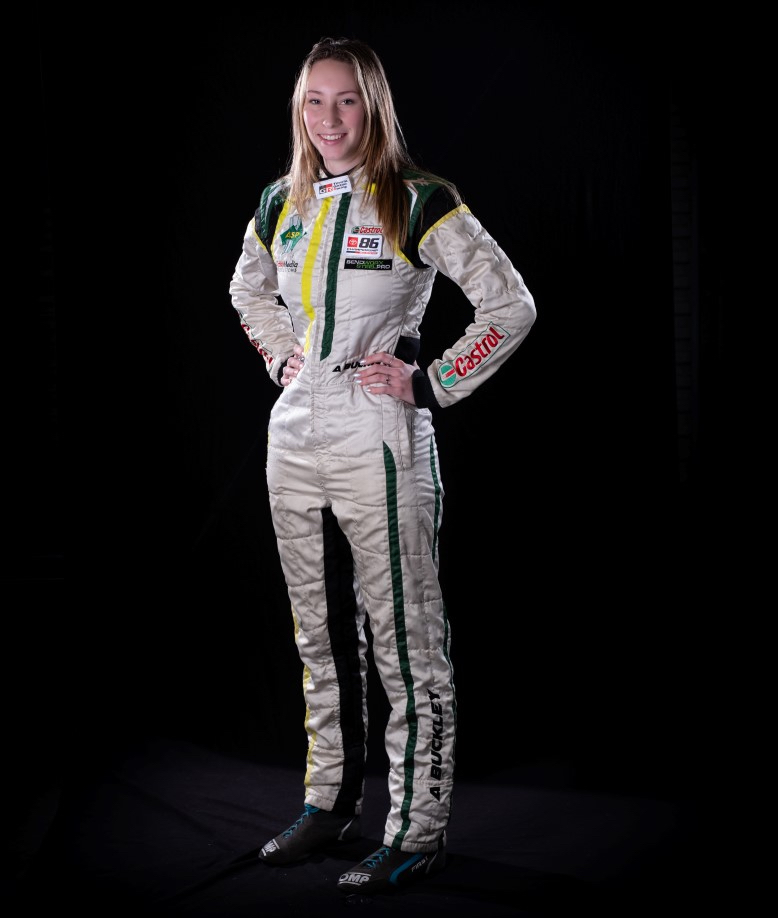
Teenager Alice Buckley is emerging as one of Australian motorsport’s brightest prospects, with her sights now firmly set on a Supercars career. At just 18, the Queensland driver has already claimed the Toyota GR Scholarship Series crown and delivered standout performances in the TA2 Muscle Car Series, a combination that has cemented her reputation as a future star.
“Supercars is the goal and we’re going to keep working towards that,” Buckley told Jax Tyres & Auto Race for the Championship’s Mark Fogarty in a special episode.
“At the moment, we’re just focusing on this year, but the opportunities that come with good results are exciting.”
Buckley’s adaptability has been a hallmark of her rise, seamlessly switching between the nimble Toyota 86 and the powerful TA2 V8. With guidance from Supercars veteran Tim Slade – who has helped with setup work – she has quickly adapted to the demands of big horsepower machinery.
“I’ve been very fortunate to have Tim as an amazing driver on my team,” she said.
Her progress has been accelerated by a support network that includes high-profile mentors and major corporate backers. Long-time sponsor Castrol is joined by Chevrolet Racing, AC Delco, Shannon’s Insurance and GM, giving Buckley strong ties across the motorsport landscape. Training at Paul Morris’ Norwell Motorplex has also exposed her to stars including Craig Lowndes, Will Brown, Brock Feeney and Shane van Gisbergen.
Racing has been part of Buckley’s life from an early age. She started karting at six, raced in Hyundai Excels by 14, joined the Toyota 86 Series at 15, and climbed into a TA2 car at 17. Despite only holding her driver’s licence for a year, she is already competing with – and beating – experienced rivals.
While the exact timing of a Supercars debut remains uncertain, her link with Chevrolet Racing opens doors for the next step, whether through Super2 or a wildcard appearance.
“We don’t know what the future’s going to hold at all,” she said.
“But we’ll keep working towards Supercars.”
Buckley is also proud to be part of the push to increase female participation in motorsport.
“Pressure is a privilege,” she said.
“At the end of the day, I’m just another competitor. It all comes down to performance.”
Her immediate focus is the next TA2 round at Mallala, South Australia, where she hopes to add another trophy to an already remarkable season.